
15 Minutes to Zero
A human-centred awareness campaign rethinking rural travel, community behaviour, and what “sustainable” actually looks like at a local scale.
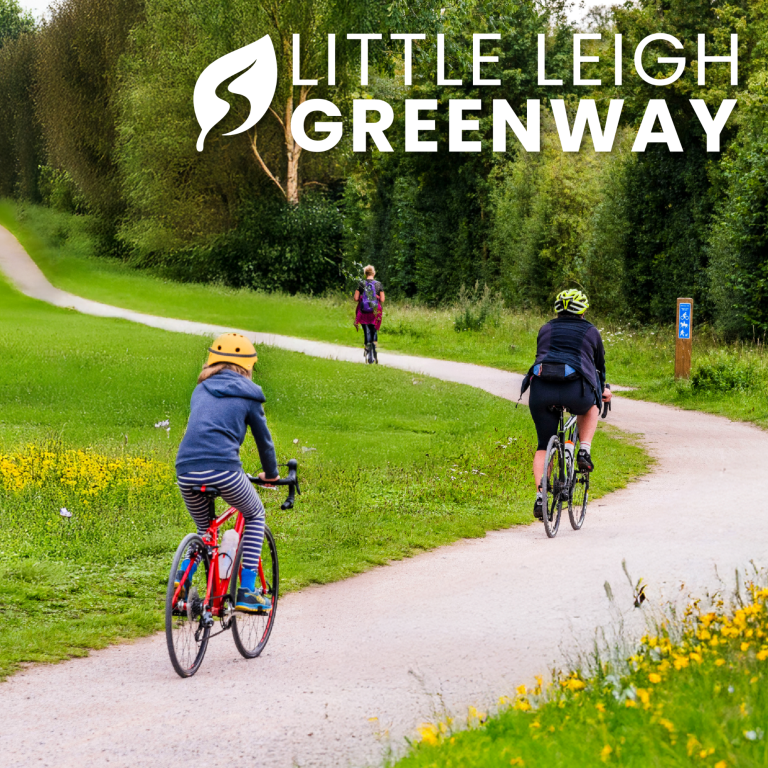
Overview
Sustainability is usually framed as a global problem.
Big systems. Big change. Big promises.
This project does the opposite.
It zooms all the way in, to a small rural village, and asks a much more uncomfortable question:
Why does something as simple as getting to school require a car?
“15 Minutes to Zero” is an awareness-led campaign designed to challenge behaviour, reduce car dependency, and introduce a realistic, human-centred alternative to everyday travel in Little Leigh.
The Problem
Little Leigh is effectively isolated.
With over 90% of primary school children arriving by car, the village experiences daily congestion, unsafe road conditions, and increasing pressure on infrastructure that was never designed to handle this volume of traffic.
But the issue isn’t just traffic.
- There are no viable public transport options
- Walking routes are unsafe, inaccessible, or non-existent
- The population is ageing, increasing reliance on cars
- And the solution people default to, driving, is actually making everything worse
This isn’t just a traffic issue.
It’s a systems failure.
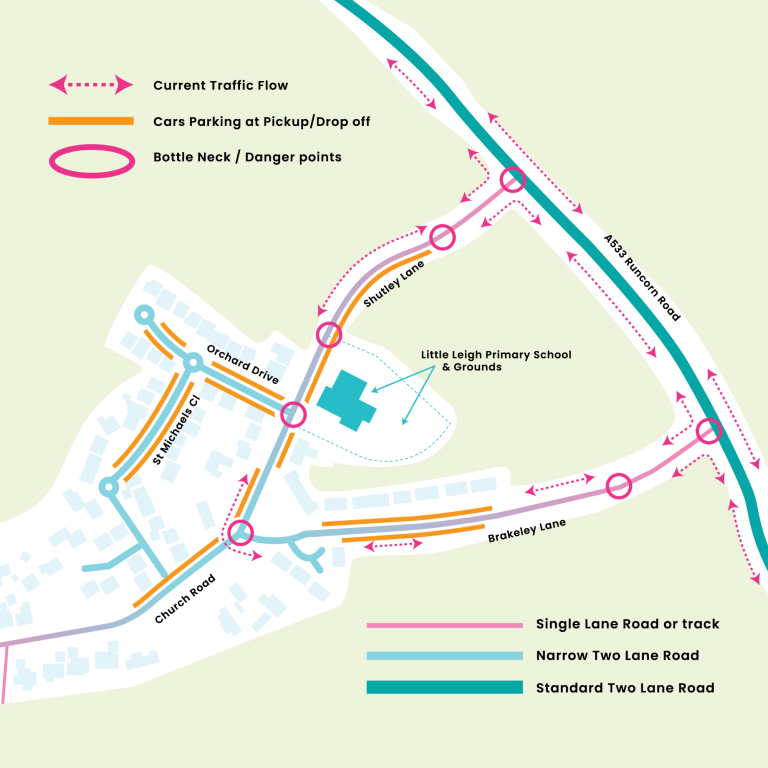
Approach
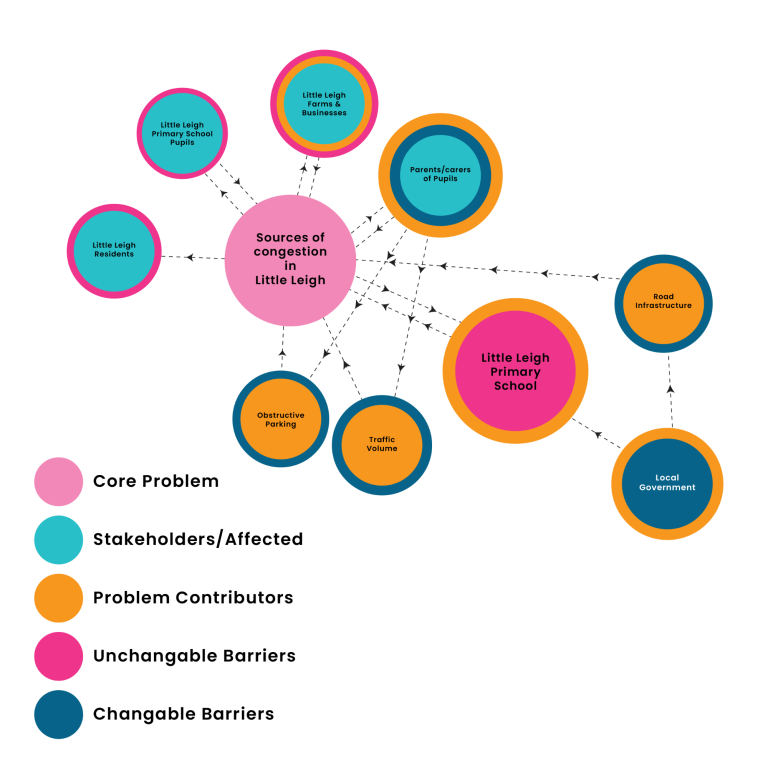
This project uses systems thinking and human-centred design to unpack a “wicked problem.”
Instead of jumping straight to solutions, I mapped:
- Who is affected
- What contributes to the issue
- What can (and can’t) be changed
Tools like system mapping and the Three Horizons framework helped shift the perspective from what is happening now to what could happen next, and ultimately, what kind of future we actually want.
Because solving the wrong problem, really well, is still failure.

The Idea
At one end of the spectrum, the future got a little bit… ambitious.
Underground transport systems reminiscent of Hollywood blockbusters. Rewilded roads. Entirely reimagined infrastructure.
But that’s the trap.
Big ideas are easy.
Actionable change is not.
So the project pivots.
Instead of trying to redesign the entire system overnight, it focuses on the first step that makes everything else possible:
👉 A safe active travel route between Barnton and Little Leigh
👉 A walking school bus to reduce car dependency
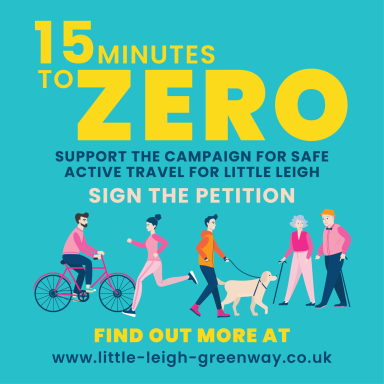
👉 And most importantly, an awareness campaign to shift behaviour
Because if people don’t buy into the idea, the idea doesn’t matter.
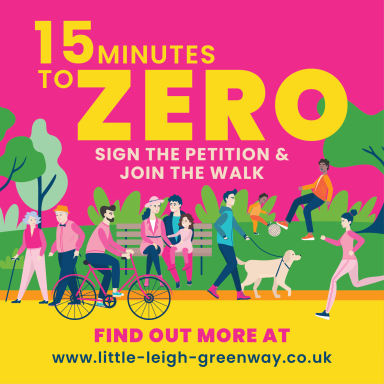
15 Minutes to Zero
The campaign is built around a simple, powerful concept:
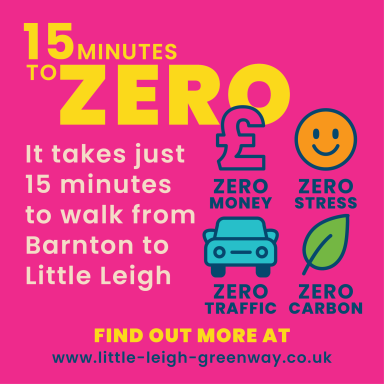
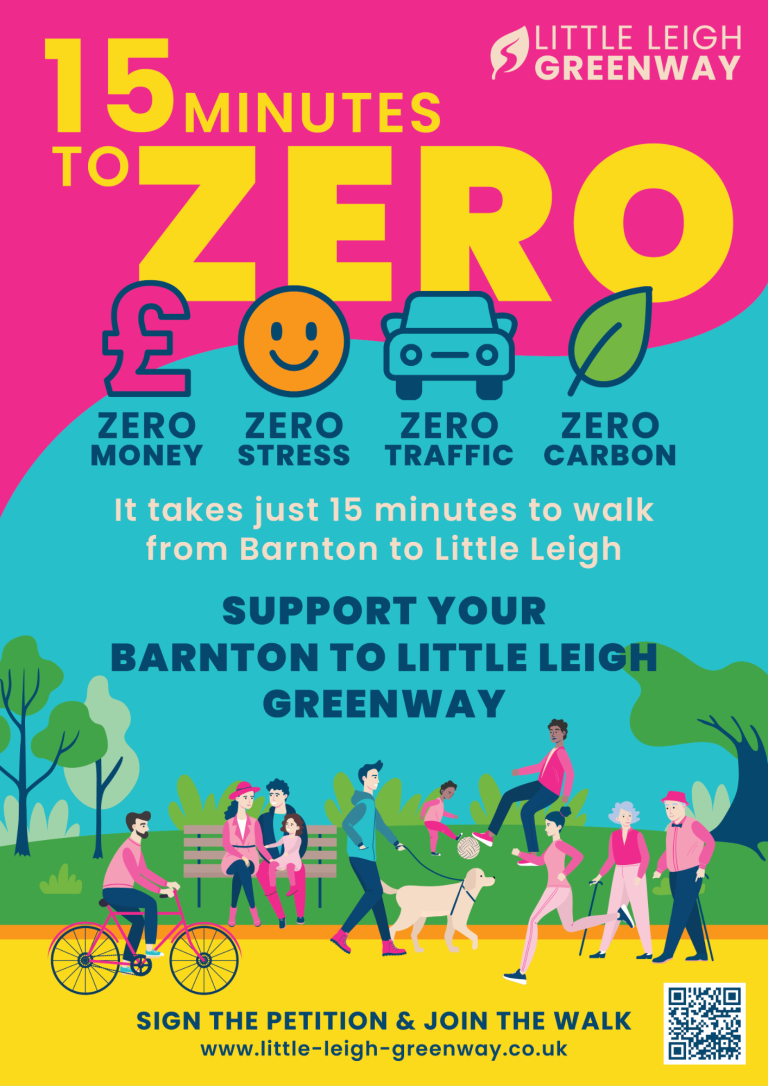
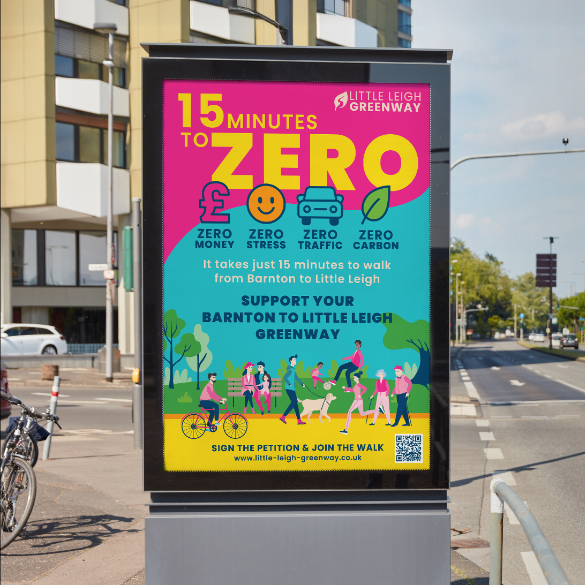
15 minutes. That’s all it takes to walk the proposed route.
Zero emissions. Zero congestion. Zero excuses.
It reframes sustainable travel from something abstract and inconvenient into something:
- Achievable
- Immediate
- Human
Design Direction
Sustainability design often falls into a predictable visual language: greens, leaves, and quiet guilt.
This project rejects that.
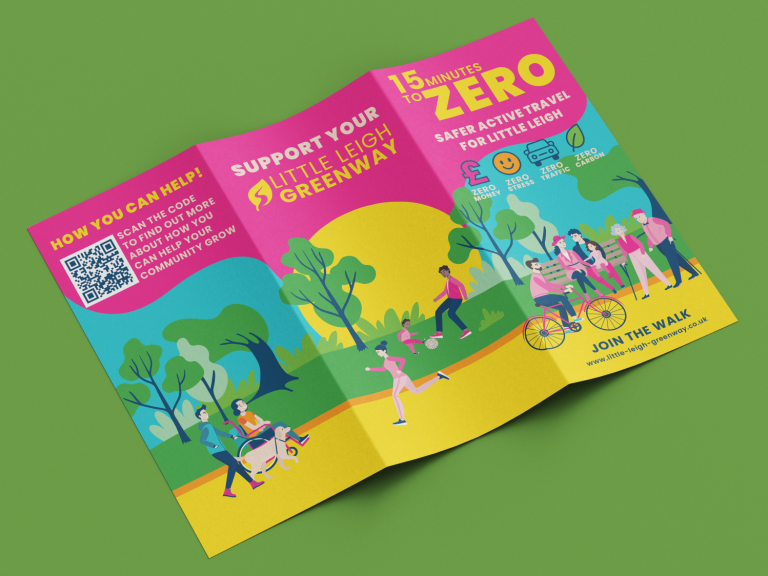
Instead, it uses bold, bright, high-energy visuals designed to grab attention and feel optimistic rather than preachy.
Because this isn’t about the planet in some distant, abstract way.
It’s about people, right now.
The system includes:
- OOH posters designed to interrupt and engage
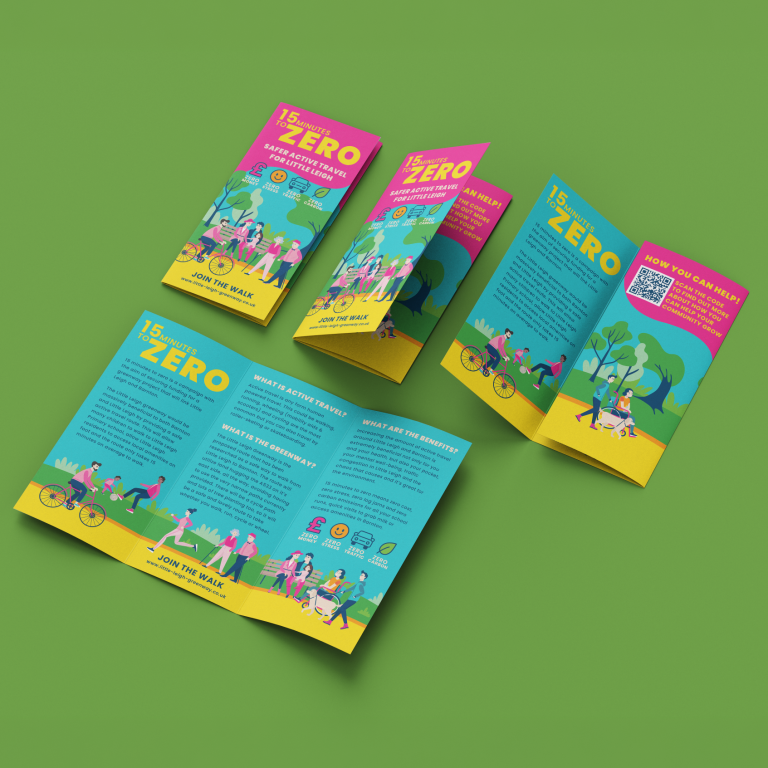
- Tri-fold flyers for deeper, localised information
- Social media assets to extend reach across demographics
- Scalable visual language adaptable across future touchpoints
Even material choices are considered, including the potential use of seed paper, allowing the campaign to physically grow into the space it’s advocating for.
Key Decisions
- Focus on behaviour change before infrastructure change
- Design for all demographics, including children and older residents
- Avoid traditional “eco” aesthetics to prevent disengagement
- Build a flexible campaign system, not a one-off output
- Ground every idea in real community insight and research
Outcome
The result is a campaign that doesn’t just raise awareness, it creates momentum.
It introduces a tangible, community-backed solution while opening the door for:
- Increased active travel
- Reduced traffic congestion
- Improved safety and wellbeing
- Stronger community connection
And critically, it provides a clear first step toward a much larger, long-term vision.
Reflection
This project proved that scale can be deceptive.
The problem feels small, one village, one school, one road.
But the implications are massive.
It also challenged the idea that design always needs to solve.
Sometimes, design needs to:
- Provoke
- Reframe
- Start the conversation
Because real change doesn’t begin with infrastructure.
It begins with people deciding to do things differently.
Contact
Contact Details
Telephone: +44 7376 028 074
E-mail: rachel@studiocinami.co.uk
Northwich, Cheshire.